The Promise Code
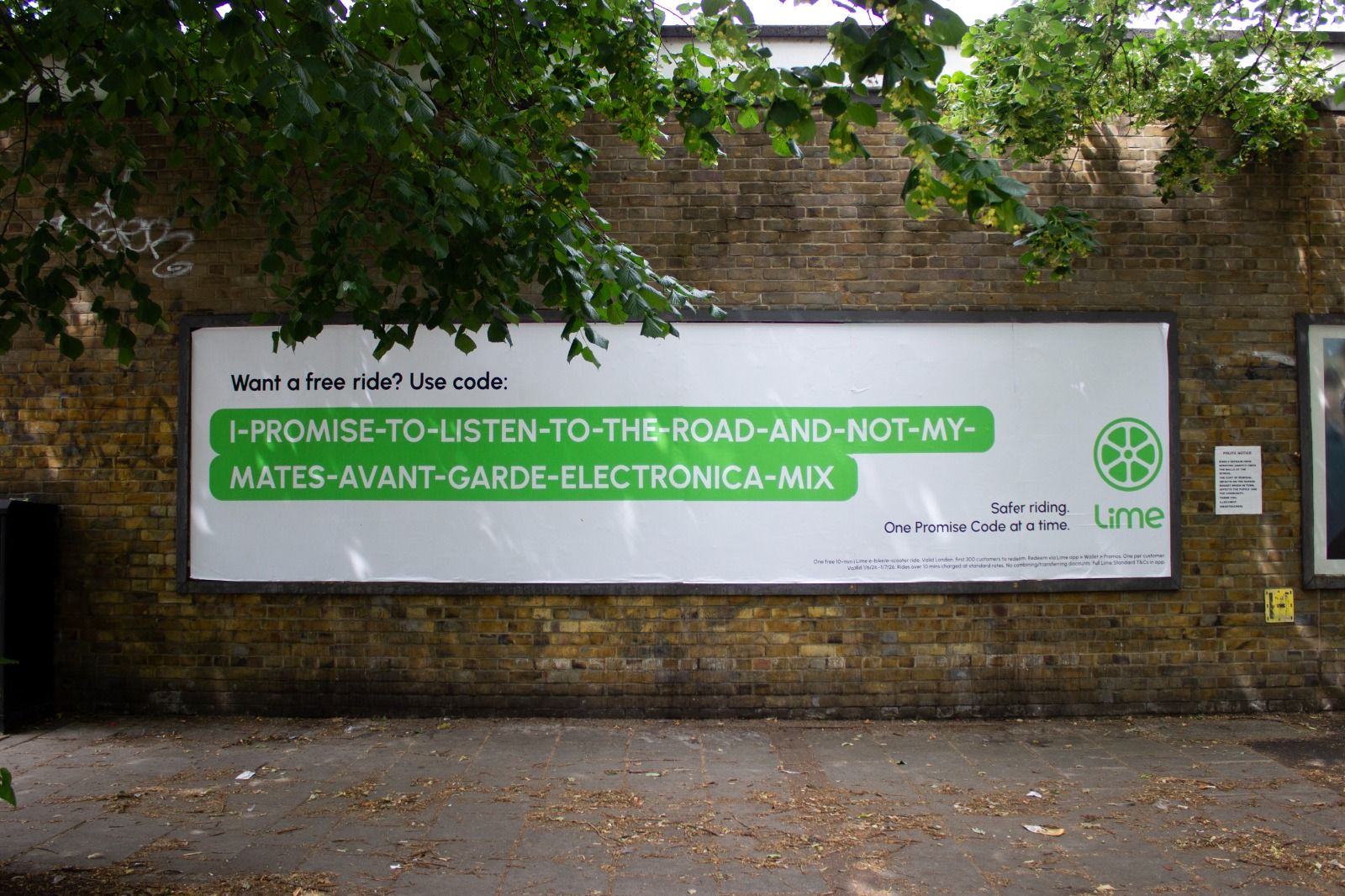
Lime turned road-safety guilt into a free ride. The London out-of-home campaign offered a discount code in the shape of a confession — "I-PROMISE-TO-LISTEN-TO-THE-ROAD-AND-NOT-MY-MATES-AVANT-GARDE-ELECTRONICA-MIX" — and made the act of typing it the safety message itself.
The story
Lime's biggest PR problem isn't the bikes — it's the riders. Headphones in, music up, swerving between buses. So in 2025 the e-bike company ran a London billboard campaign called "The Promise Code": every poster offered a free 10-minute ride if you used a wildly long, oddly specific promo code that was, in fact, a written promise about how you'd ride. "I-PROMISE-TO-LISTEN-TO-THE-ROAD-AND-NOT-MY-MATES-AVANT-GARDE-ELECTRONICA-MIX." Typing it into the app was the campaign — a tiny behavioural-science contract dressed up as a coupon. The strapline read "Safer riding. One Promise Code at a time." Capped at the first 300 redeemers per code, the posters did the work of a public-information campaign while looking like a freebie, and gave every passer-by a quotable line to photograph and share. Earned media on every micromobility and design blog within days.
Why it worked
It dressed a behaviour-change ask as a discount, and made the user pre-commit to the safer behaviour out loud just to claim it.
Takeaway for marketers
If you want people to change behaviour, don't lecture them — let them opt in by typing the promise themselves.