OpenAI spent years telling the world it was different. Not a media company. Not an ad-tech platform. Not Google. Then, on February 9, 2026, it launched ads in ChatGPT.
Quietly, by their standards. No big press event. No Cannes Lions deck. Just a blog post with the headline "Testing ads in ChatGPT" and a screenshot of a meal kit ad appearing at the bottom of a recipe conversation.
The move was inevitable, but the speed of the rollout is worth paying attention to. In four months, OpenAI went from a single-country test to active pilots in nine markets, a self-serve ad buying platform, and CPC bidding. That is not a slow test. That is a product launch dressed as a test.
Where It Started and Where It Is Now
The initial test launched in the United States only, for logged-in adult users on the Free and Go subscription tiers. Paid plans (Plus, Pro, Business, Enterprise, Education) remain ad-free, at least for now.
Then the expansion happened faster than most people noticed:
March 26, 2026: OpenAI announced expansion to Canada, Australia, and New Zealand.
May 7, 2026: The pilot extended to the United Kingdom, Mexico, Brazil, Japan, and South Korea.
That is nine countries in roughly three months. If you are running a brand or buying media in any of those markets, this is already live. If you are not in one of those markets yet, you probably will be before the year is out. OpenAI said plainly that it hopes to "expand to many more markets this year."
What the Ads Actually Look Like
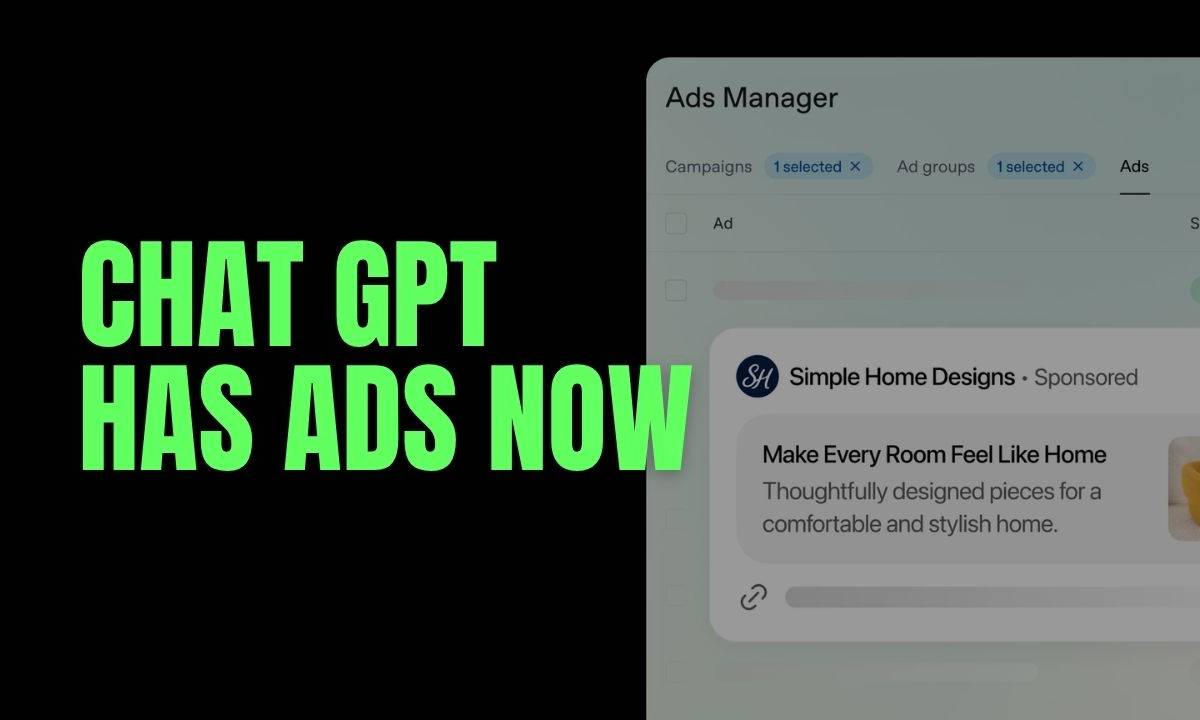
The format is simple and, by design, very controlled. Ads appear at the bottom of an AI-generated response. They are always labeled "Sponsored." They are visually separated from the answer itself, typically with a tinted box. The answer does not change based on who is advertising.
OpenAI's stated principle: ads do not influence the answers ChatGPT gives. The response is optimized for the user. The ad is appended below it.
The early example OpenAI published showed a grocery brand (Heirloom Groceries) advertising a product in a conversation about planning a dinner. Meal kit shown. Price shown. Cook time shown. Clearly beneath the actual response.
It is closer to a classified listing than a banner ad. That framing is not accidental. The bet is that contextually relevant, clearly labeled ads placed below a useful answer feel less hostile than the average web ad. Whether that holds at scale is a different question.
How Targeting Works
OpenAI does not use keyword targeting. Instead, it uses what it calls contextual matching, drawing on three signals: what you are currently discussing, your past chat history, and your past interactions with ads in ChatGPT.
Advertisers submit "context hints," which are broad thematic descriptions of the situations or questions their target users might bring to ChatGPT. Not exact match keywords. More like: "users researching meal planning" or "people comparing laptops before buying."
Advertiser privacy rule, as stated by OpenAI: advertisers never see your chat content, chat history, memories, or personal details. They only receive aggregated data, things like total impressions and total clicks. No individual user data passes to the advertiser.
There are also restrictions on where ads appear. No ads in conversations flagged as sensitive, which includes health, mental health, and politics. No ads on accounts predicted or confirmed to belong to users under 18.
What It Costs to Advertise
This is where the story gets interesting for anyone in media buying.
When OpenAI first brought in launch partners in late 2025, the minimum commitment was $200,000. Not a typo. This was an invite-only pilot for large brands, with $250,000 to $300,000 commitments reported for select early advertisers.
The first wave of named participants was exactly what you would expect: Target, Adobe, Williams-Sonoma, Albertsons. Big retail, big budgets, established brand safety departments.
Then the floor dropped.
By mid-2026, a quarterly spend commitment of around $50,000 was enough to get in. In May 2026, OpenAI launched a self-serve Ads Manager in beta, open to any advertiser, with no minimum spend. At the same time, it added cost-per-click bidding alongside the existing CPM model, and rolled out a measurement pixel and a Conversions API.
Current pricing as of mid-2026: CPC rates range from roughly $2 to $8 depending on category. CPM started at approximately $60 when the platform launched, though that number has been shifting as more inventory opens.
The practical consequence: ChatGPT advertising went from a $200,000 entry fee accessible only to enterprise brands to a self-serve platform any business can enter, all within about six months.
Why OpenAI Is Doing This (The Actual Reason)
The official framing is mission alignment. Ads fund the free tier. The free tier expands access to AI. Expanding access to AI serves the mission.
That is true as far as it goes. But the number underneath it is more straightforward: OpenAI is targeting $25 billion in ad revenue. ChatGPT has roughly 800 million weekly active users. Even a modest CPM across a fraction of that base generates enormous revenue potential.
The company has been burning cash at a scale that makes subscription revenue alone insufficient. Ads are not a supplement. For OpenAI to operate at the size it has planned, advertising is a primary funding mechanism. The test framing gives them room to adjust if something breaks, but the direction is not in question.
What This Means for GEO and Organic Visibility
This is the part most coverage is skipping.
ChatGPT answers are explicitly stated to be independent of ad purchases. But the two systems are not completely separate either. Ads are matched to conversations based on the topics OpenAI detects in those conversations. That means OpenAI is building and continuously refining a semantic understanding of user intent inside ChatGPT, at scale, in real time.
For brands investing in GEO (Generative Engine Optimisation), this creates a new dynamic. The same contextual signals that OpenAI uses to match ads are the signals that shape how brands appear organically in AI answers. Being the brand that ChatGPT associates with a given topic or category becomes more commercially significant as ad inventory around that category grows.
Put plainly: if ChatGPT learns your brand is the authoritative answer to a type of question, that matters both for organic mentions and for how your ads get matched. The two are not the same system, but they feed from the same semantic layer.
The User Control Layer
OpenAI built an opt-out path into the original launch, which is worth noting because most ad platforms do not. Free tier users can choose to see fewer daily messages instead of ads. Users can also dismiss individual ads, share feedback on them, delete their full ad history with one tap, and turn off ad personalization entirely.
Whether those controls hold as the platform scales, and whether the trade-off (fewer messages vs. no ads) becomes more punishing over time, is something to watch. But the controls exist at launch, which is not nothing.
The Honest Read
OpenAI built the most-trusted AI assistant in the world and is now inserting ads into it. The design is cleaner than most ad products. The privacy constraints are stricter than most ad networks. The format is less intrusive than the average search results page.
But it is still ads. And the dynamic that made ChatGPT feel different from Google, that there was no commercial interest shaping what you saw, is now complicated. Not destroyed. Complicated.
For brands, the window to establish contextual authority in ChatGPT, both organically and through the new ad platform, is now. The inventory is new, the audiences are large, the minimums have dropped, and most advertisers have not moved yet.
That window will not stay open as long as it looks.
Sources: OpenAI (openai.com/index/testing-ads-in-chatgpt, openai.com/index/new-ways-to-buy-chatgpt-ads), PYMNTS, eMarketer, AdVenture Media, ALM Corp.