Apple — 1984
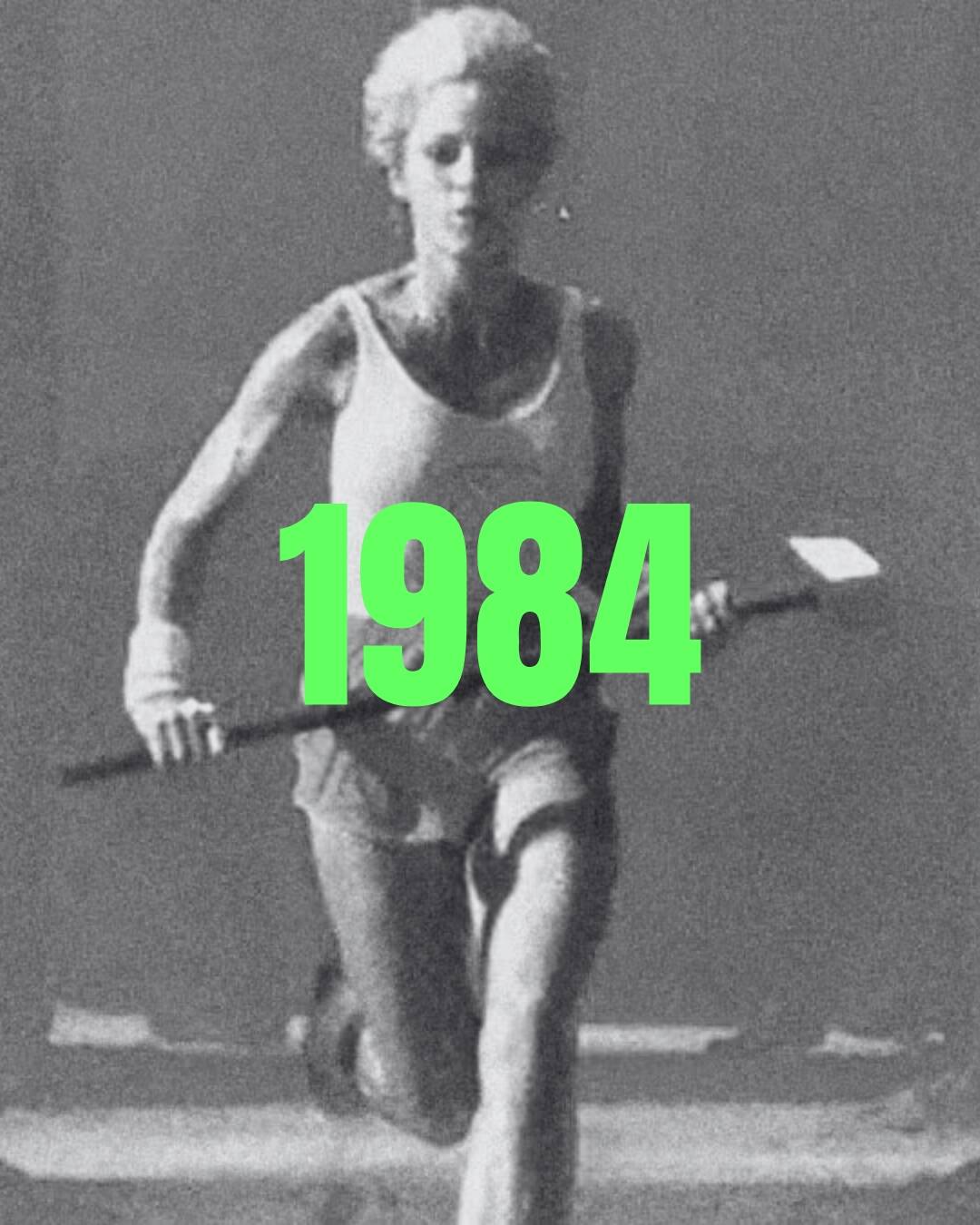
Directed by Ridley Scott, this Super Bowl spot introduced the Macintosh by casting Apple as the rebel hammer-thrower smashing IBM's dystopian conformity. It aired once and rewired what a TV commercial could be — cinematic, political, and unmistakably a brand manifesto.
The story
Apple's board hated it. They tried to sell the airtime back. Steve Jobs and Lee Clow refused, and on January 22, 1984, during Super Bowl XVIII, the spot aired exactly once — sixty seconds of Orwellian grey corridors, an athlete sprinting through riot police, and a sledgehammer through the Big Brother screen. "On January 24th, Apple Computer will introduce Macintosh. And you'll see why 1984 won't be like '1984'." It announced no features, showed no product, and named no competitor. It positioned Apple as a worldview. The ad cost $900,000 to produce and $800,000 to air, and earned an estimated $150 million in unpaid media as every news show in America replayed it. It is the spot that turned the Super Bowl into the Super Bowl of advertising.
Why it worked
It sold a feeling — rebellion against corporate sameness — and trusted the audience to map it onto a product they hadn't seen yet.
Takeaway for marketers
If your ad would make sense as a short film, it'll outlive the campaign by 40 years.