Think Different
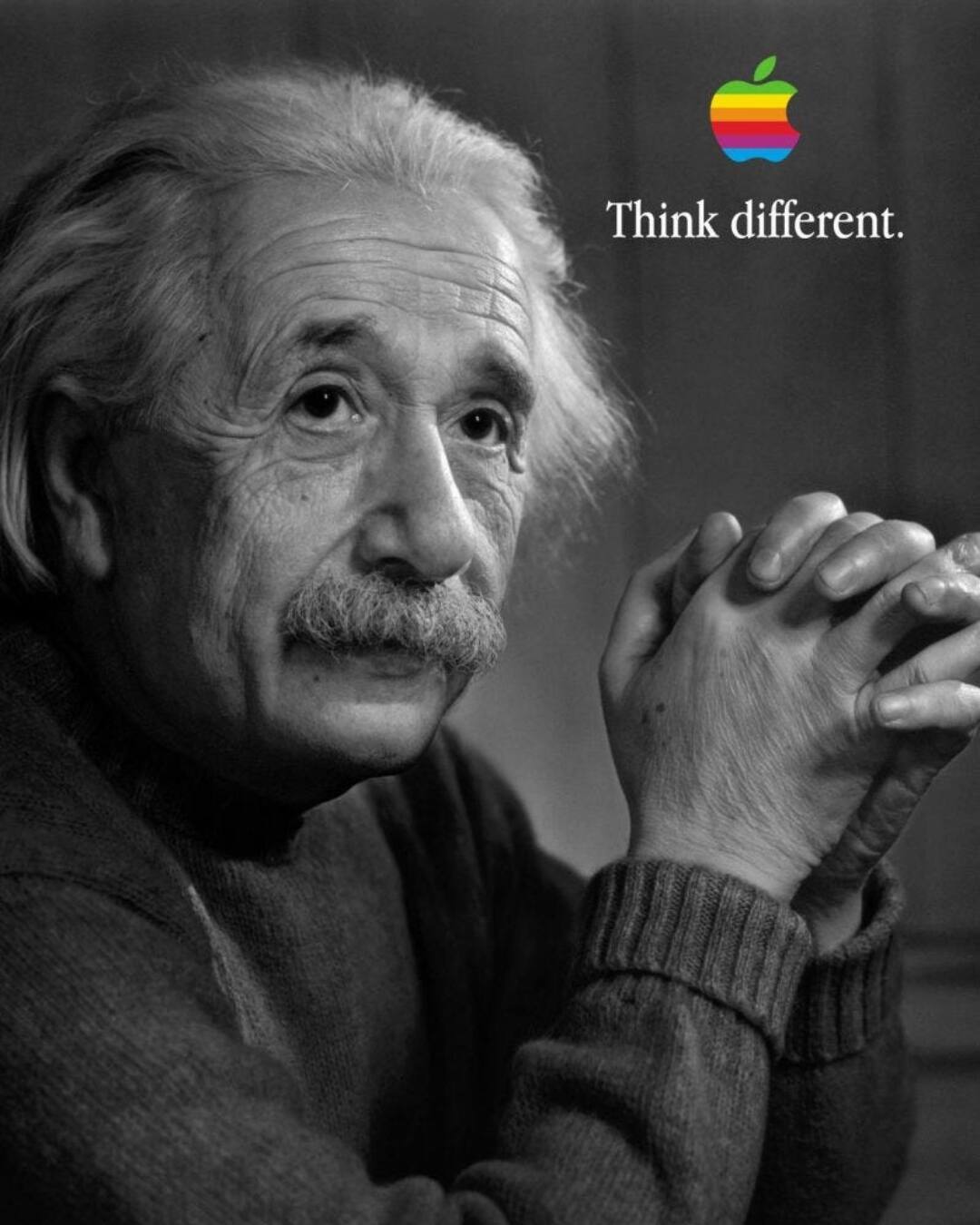
When Jobs came back to a near-dead Apple, the first thing he shipped wasn't a product — it was a worldview. Einstein, Gandhi, Ali, Dylan, narrated like a prayer. The company spent a decade earning the right to that voice.
The story
1997: Apple was 90 days from bankruptcy. Steve Jobs had just returned. Before the iMac, before OS X, before any new product, he launched a brand campaign. Black-and-white footage of Einstein, Gandhi, Picasso, Bob Dylan, Muhammad Ali, Hitchcock, Amelia Earhart — none of them Apple users, most of them dead — over a voiceover by Richard Dreyfuss: "Here's to the crazy ones. The misfits. The rebels…" There was no product in the spot. No price. No URL. Just a philosophical claim about who Apple's customers were and who they wanted to be. The campaign ran for five years, restored Apple's permission to make beautiful things, and is arguably what saved the company from being a footnote in computing history. Sales doubled within a year of launch — and Apple's brand value has never stopped compounding since.
Why it worked
It sold the user back to themselves. The flattery was so sincere it stopped feeling like flattery.
Takeaway for marketers
When the product story is weak, sell the customer story.